7 Metrology Trends 2026
For decades, metrology has been positioned as a downstream activity, focused on confirming conformance, supporting release decisions, and satisfying regulatory or customer requirements. While this role remains essential, it is no longer sufficient on its own.
As part of the metrology trends 2026, manufacturers in regulated and high-precision industries are operating in a very different environment. Measurement data is no longer expected to simply validate outcomes. It is increasingly expected to inform decisions, reduce risk, and support manufacturing performance in real time.
Rising product complexity, tighter tolerances, advanced materials, and increasing regulatory scrutiny mean that identifying issues at final inspection is both costly and inefficient. These pressures are reshaping how metrology is viewed, applied, and invested in.
Trend 1: Metrology Is Moving Upstream into Manufacturing
One of the most significant metrology trends 2026 is the shift away from metrology as a final quality gate towards earlier, more integrated use within manufacturing.
Rather than detecting issues at the end of the process, measurement is moving closer to the point of manufacture. Near-line and in-process measurement strategies allow organisations to understand process behaviour, not just product compliance. This enables earlier intervention, faster feedback, and reduced scrap.
In sectors such as medical devices, pharmaceuticals, and aerospace, where tolerances are tight and failure carries high risk, this shift is critical. Metrology is increasingly used to characterise processes, understand variation, and validate manufacturing capability, not just confirm pass or fail results.
Trend 2: Measurement Data Is Becoming Manufacturing Intelligence
Another defining metrology trend 2026 is the expectation that measurement data delivers insight, not just reports.
In many organisations, metrology data remains fragmented. Results are stored locally on machines, exported as static files, or manually transferred into spreadsheets. While this may meet basic documentation requirements, it limits the ability to identify trends, correlate variation, or respond quickly to emerging issues.
Leading manufacturers are integrating metrology data with MES, SPC, and QMS platforms. This allows dimensional results to be viewed alongside process parameters, batch data, and non-conformance records. The result is context-rich information that supports faster, more informed decision-making.
When measurement data is structured, accessible, and connected, it becomes a key input to manufacturing intelligence rather than an isolated quality record.
Trend 3: Metrology Is Enabling Closed-Loop Manufacturing
Closed-loop manufacturing is moving from concept to reality and is a major driver within metrology trends 2026.
In a closed-loop environment, measurement data is used not only to monitor outcomes but to actively influence and control manufacturing processes. This may include adjusting machining offsets, compensating for tool wear, or modifying process parameters based on measured trends.
The distinction is important. Monitoring identifies when something has gone wrong. Control enables corrective action before non-conformance occurs.
Many organisations are adopting phased approaches, starting with decision support rather than full automation. Measurement data is used to guide operators and engineers, with automation introduced as confidence in system capability and data integrity increases.
In regulated industries, success depends on robust validation, clear decision rules, and proven measurement capability. Poorly implemented closed-loop systems risk amplifying errors rather than correcting them.
Trend 4: Traceability and Data Integrity Are Under Greater Scrutiny
As metrology becomes more central to manufacturing decisions, regulatory expectations are increasing in parallel. This is a critical aspect of metrology trends 2026.
Measurement data is no longer viewed solely as evidence for product release. Regulators increasingly scrutinise how data is generated, stored, modified, and used, particularly when it influences process control or quality decisions.
Traceability now extends beyond calibration certificates. It includes clear links between measured features, product revisions, inspection programs, decision criteria, and process adjustments. Data integrity controls around access, versioning, audit trails, and approvals are essential.
When implemented correctly, integrated metrology systems can strengthen compliance. Automated data capture reduces transcription errors, structured workflows improve consistency, and centralised records improve audit readiness. The key is ensuring that technological advancement is matched with appropriate governance and validation.
Trend 5: Metrology Is Becoming a Strategic Capability
Perhaps the most important metrology trend 2026 is the shift in how metrology is perceived within organisations.
Leading manufacturers no longer treat metrology as a standalone quality function or a necessary overhead. Instead, it is viewed as a strategic manufacturing capability that supports engineering, operations, and quality teams alike.
This shift has implications for skills, structure, and investment. Metrology teams increasingly require data analysis and process understanding skills. Quality functions must work more closely with manufacturing and engineering. Investment decisions extend beyond individual machines to include systems, integration, training, and long-term scalability.
Organisations that align people, process, and technology are better positioned to extract real value from measurement and reduce both operational and regulatory risk.
Trend 6: Automation Is Reshaping How Metrology Is Delivered
Automation is becoming one of the most visible metrology trends 2026, driven by the need for consistency, scalability, and faster feedback in increasingly complex manufacturing environments.
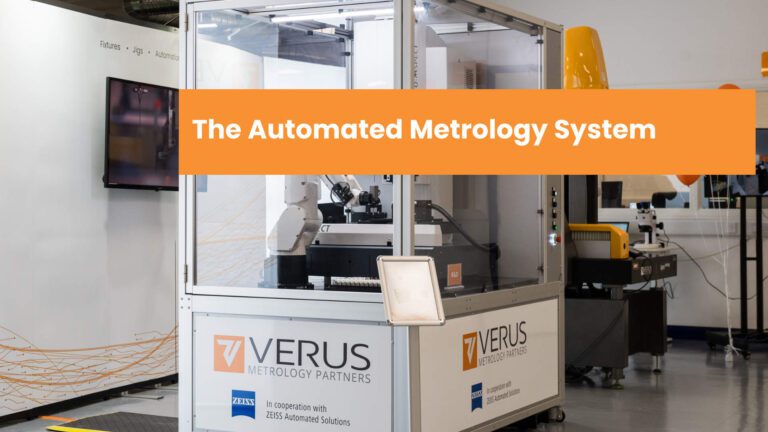
Manual inspection processes are often resource-intensive and difficult to scale, particularly as production volumes increase or product variants multiply. Automated metrology solutions, including palletised CMMs, robotic loading, and automated measurement routines, are helping organisations maintain inspection capacity without a proportional increase in headcount.
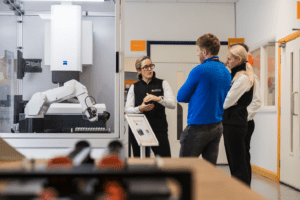
Beyond throughput, automation metrology systems improve repeatability and reduces operator-dependent variation. Automated workflows ensure that inspections are performed consistently, using validated programs and defined decision rules. This is particularly valuable in regulated industries, where consistency and traceability are critical.
However, automation also raises new considerations. Automated systems must be carefully validated, and exception handling processes must be clearly defined. Successful automation is not about removing human oversight entirely, but about enabling skilled teams to focus on analysis, decision-making, and continuous improvement rather than repetitive tasks.
Trend 7: CT and 3D Scanning Are Expanding the Scope of Measurement
Computed tomography (CT) and advanced 3D scanning technologies are playing an increasingly important role within metrology trends 2026, particularly as products become more complex and less accessible to traditional measurement methods.
CT metrology solutions enable the non-destructive inspection of internal features, assemblies, and complex geometries that cannot be measured using tactile or optical CMMs alone. This is especially valuable in sectors such as medical devices and aerospace, where internal structures, additive manufacturing, and complex assemblies are common.
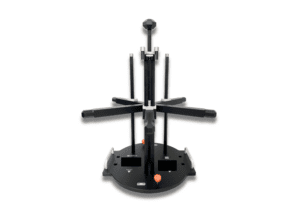
Similarly, high-resolution 3D scanning and fixturing is increasingly used for rapid geometry capture, surface analysis, and comparison against CAD models. When applied appropriately, these technologies can significantly reduce inspection time and provide insight that would otherwise be difficult or impossible to obtain.
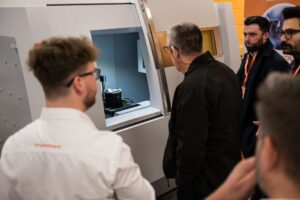
As with other advanced metrology techniques, success depends on understanding capability and limitations. CT and 3D scanning and fixturing require careful consideration of accuracy, resolution, uncertainty, and data volume. When integrated into a broader metrology strategy, they complement traditional measurement methods rather than replace them, extending the reach and value of measurement across the product lifecycle.
Preparing for Metrology Maturity Beyond 2026
The transition from traditional inspection to manufacturing intelligence does not happen overnight. For most organisations, it is the result of incremental, deliberate changes in how measurement is applied and how data is used.
A practical starting point is understanding how measurement data is currently used and where it could deliver greater value. From there, improvements in integration, analysis, governance, and skills can be introduced in a controlled and compliant way.
Working with experienced metrology partners can help organisations avoid common pitfalls, validate new approaches, and align metrology strategies with regulatory expectations, particularly when introducing automation, advanced analysis, or new measurement technologies.
If you would like to understand how these metrology trends 2026 apply to your organisation, or explore how improved measurement strategies, data integration, and metrology support could strengthen your manufacturing and quality processes, we would be happy to help.
Contact a member of our team to schedule a discovery call and discuss how our metrology services can support your team, your processes, and your regulatory requirements.